Is a Water Flosser Better Than Floss? A Dental Hygienist Explains
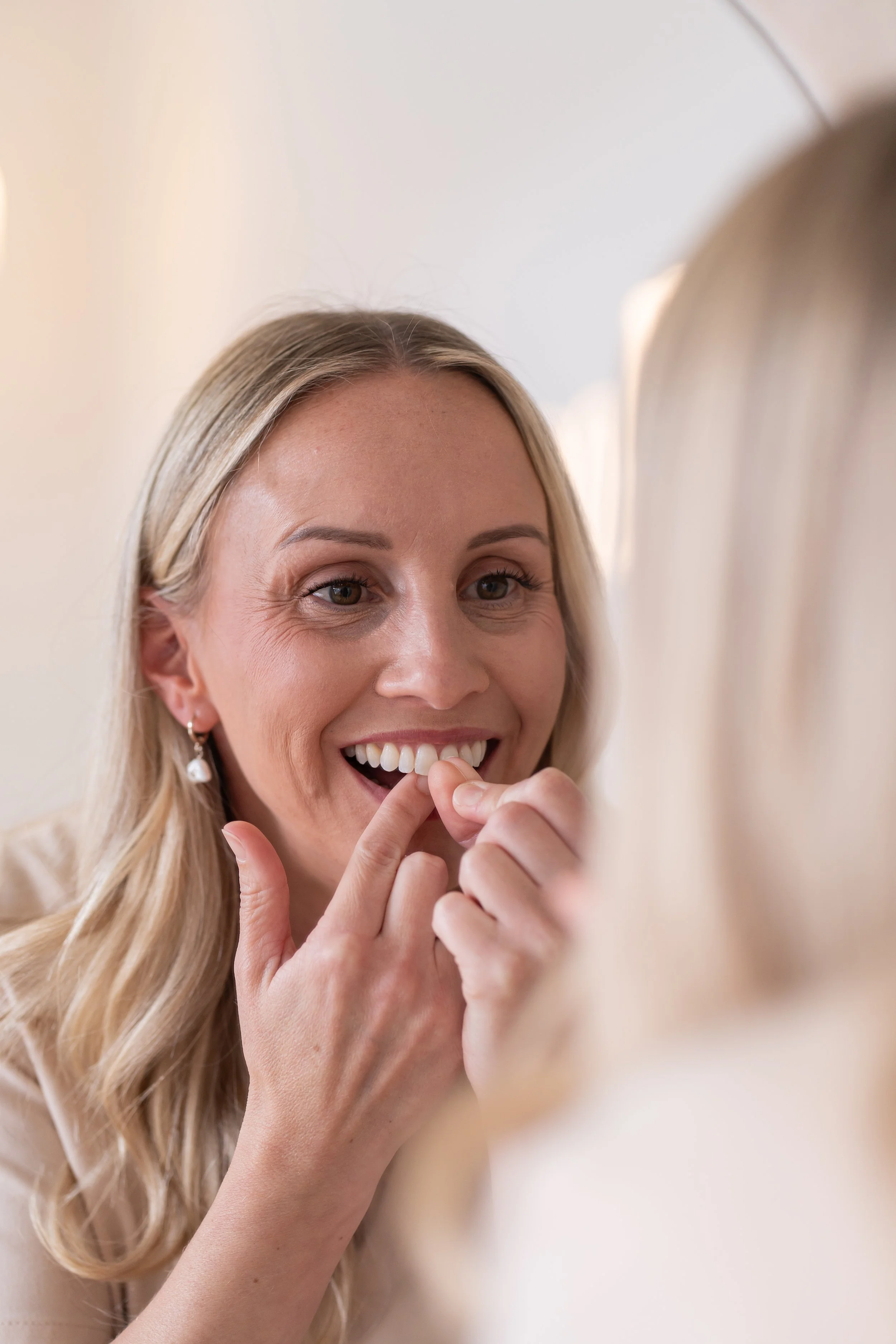
Water flossers have become incredibly popular, and one of the questions I get asked all the time is:
“Can I just use a water flosser instead of floss?”
The short answer…
Water flossers can be a great addition to your oral hygiene routine, but they don't necessarily do the same job as traditional floss.
And depending on your teeth and gums, there may actually be another option that's even better for you.
Let's break it down.
What does a water flosser actually do?
A water flosser uses a pressurised stream of water to clean around the teeth and along the gumline.
They're particularly useful for flushing out food and debris from areas that can be difficult to reach with a toothbrush.
Water flossers can also be a great option if you have:
braces
bridges or other dental work
difficulty using traditional floss
reduced dexterity
larger spaces between your teeth
And if using a water flosser means you're actually cleaning between your teeth every day when you otherwise wouldn't, that's a win.
But there's an important difference between a water flosser and traditional floss.
Floss physically wipes the tooth
Plaque is a sticky bacterial biofilm that attaches to the surface of your teeth.
When you floss correctly, you're not simply removing food from between your teeth.
You're physically wiping that plaque away from the tooth surface.
This is why flossing technique matters so much.
Instead of just moving the floss straight up and down through the gap, you want to curve it around the side of each tooth in a C-shape and gently wipe the tooth surface, including just underneath the gumline.
Think of it like wiping something sticky off a bench.
Running water over it may help, but sometimes you need that physical wiping action to remove what's attached to the surface.
So, is a water flosser as good as floss?
This isn't necessarily a question of one being "good" and the other being "bad".
They're simply different tools.
Water flossers can be very useful for disrupting plaque, flushing out debris and reaching difficult areas. They're also a fantastic option for people who struggle to use traditional floss consistently.
But where the teeth are touching tightly together, I generally still like to see some form of physical cleaning against the sides of the teeth.
For some people, that's floss.
For others, it may be an interdental brush.
What about interdental brushes?
This is where personalised oral hygiene becomes important.
Traditional floss isn't automatically the best option for every single space in your mouth.
If you have larger spaces between your teeth, which can be particularly common if you've experienced gum recession or gum disease, an appropriately sized interdental brush can be incredibly effective.
The little brush passes through the space and physically cleans the sides of the teeth.
You may even need different sizes for different areas of your mouth.
This is one of the things I assess during a hygiene appointment: what actually fits your mouth and your teeth?
Because the best interdental cleaning tool is the one that effectively cleans the space and that you're able to use consistently.
Can I use both floss and a water flosser?
Absolutely.
It doesn't have to be one or the other.
You might use floss between tight contacts, interdental brushes in larger spaces and a water flosser around areas that are particularly difficult to access.
Your routine doesn't have to look exactly like somebody else's.
The goal is simply to remove as much plaque as possible from the areas your toothbrush can't reach.
What if my gums bleed when I floss?
This is another question I hear constantly.
If your gums bleed when you start flossing, it doesn't necessarily mean you've damaged them or that you should stop.
Bleeding gums are often a sign of inflammation caused by plaque sitting around the gumline.
When you start cleaning that area properly and consistently, the inflammation, and therefore the bleeding, should begin to improve.
If your gums continue to bleed despite good daily cleaning, or you're noticing swelling, persistent bad breath or changes around your gums, it's worth having your gum health professionally assessed.
So which should you use?
If you love your water flosser, you don't need to throw it away.
But I wouldn't necessarily assume that because you're using one, every surface between your teeth is being cleaned effectively.
For many people, the best routine is a combination of tools.
Floss for tight spaces.
Interdental brushes where they fit.
A water flosser as an additional tool or for areas that are difficult to access.
And if you have no idea which one you should be using, that's exactly the kind of thing your dental hygienist can help you work out.
At Floss, I don't just tell you to “floss more”.
I assess your gum health, look at where plaque is accumulating and show you exactly which tools and techniques will work best for your mouth.
Because good oral hygiene isn't about doing more.
It's about knowing how to clean your teeth effectively.
Want to know if you're cleaning between your teeth properly?
Book a comprehensive hygiene appointment at Floss Dental Hygiene & Teeth Whitening in Frankston. We'll assess your gum health, professionally clean your teeth and create a personalised home-care routine based on what your mouth actually needs.